Evaluating plastic collection devices: methodologies, efficiencies, and impact assessment
Standardized protocols and lessons learned from collection pilots in Amsterdam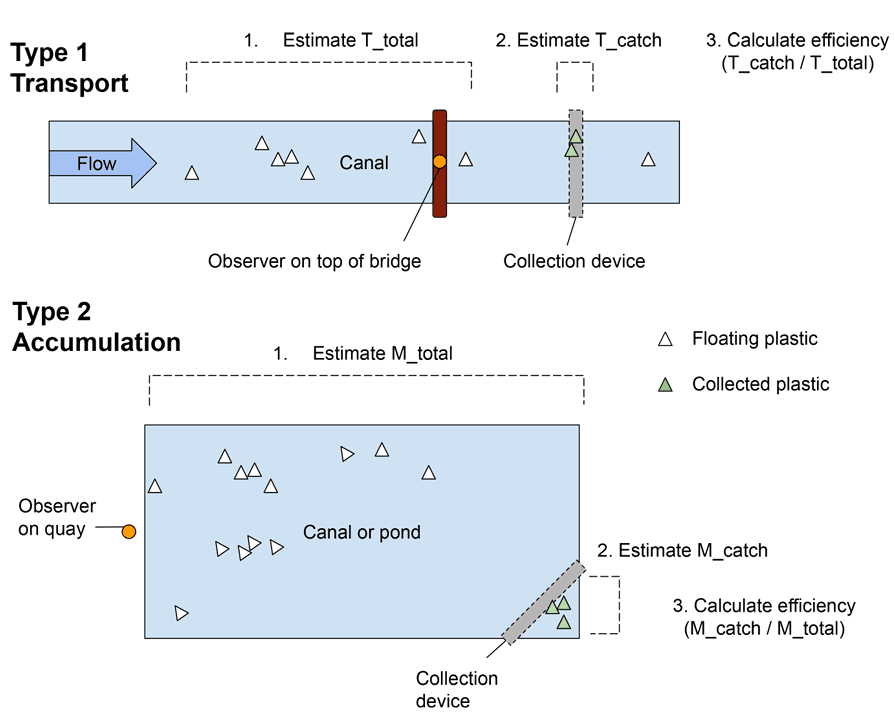
Plastic pollution entering urban waterways poses significant risks to aquatic ecosystems and infrastructure, prompting cities to deploy localized interception technologies to capture waste before it reaches downstream river basins and marine environments. This report proposes a step-wise evaluation framework to measure the collection efficiency, effectiveness, and impact of plastic capture devices deployed across Amsterdam’s water bodies. The methodology categorizes interception technologies into two operational types: Type 1 systems for flowing canals (evaluating daily capture rate against upstream transport flux) and Type 2 systems for standing water or ponds (evaluating captured plastic against total accumulated stock).
The framework incorporates River-OSPAR sorting protocols to categorize captured waste alongside tracker release experiments (e.g., using oranges to simulate floating transport) to measure capture rates and leakage. Applying available empirical and monitoring data to case studies revealed substantial ranges in estimated collection efficiency due to environmental variables (wind direction and hydrometeorological events), sampling limitations, and device capacity constraints. The report concludes with key recommendations for future pilot evaluations, emphasizing the need for aligned monitoring budgets, simultaneous observation periods, pre-deployment stakeholder agreements on maintenance and data collection, and clear operational definitions of "impact" following SMART criteria.
The full report is available here, alongside the complete impact monitoring protocol.
For any questions, or to request access to the document appendices, please feel free to reach out at any time to project manager Francesca Alberti at francesca.alberti@ams-institute.org.